
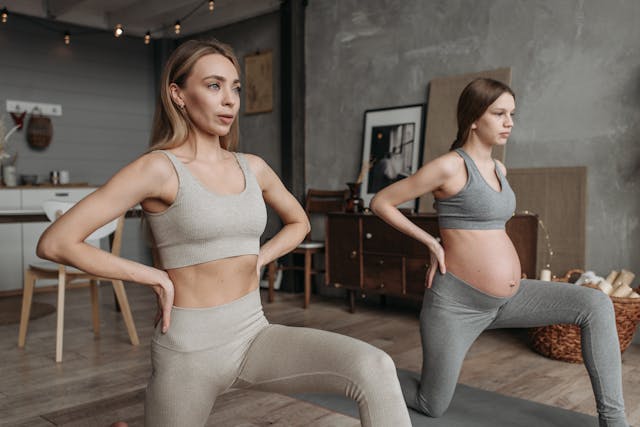
The postpartum period marks a stage of recovery, adaptation, and healing for the body after childbirth. Exercise during this time does not resemble pre-pregnancy or general fitness routines because the body has undergone significant changes.
Key reasons early postpartum exercise looks different:
- Physical recovery: Muscles, ligaments, and the pelvic floor need time to regain stability after stretching and stress during pregnancy and delivery.
- Hormonal influence: Hormones like relaxin remain elevated, affecting joint stability and making high-impact movement risky.
- Energy demands: Sleep disruption and breastfeeding increase fatigue, requiring gentler approaches to avoid overexertion.
- Mental health: Gentle exercise supports mood and reduces stress, but intensity must be carefully balanced to prevent overwhelm.
- Medical guidance: Safe postpartum exercise begins with breathing, core engagement, and light mobility, often under professional advice.
In practice, early postpartum exercise focuses on breathing, posture, walking, and pelvic floor work. Higher-intensity training is reintroduced gradually, guided by recovery pace and medical clearance.